
 Deutsch
  Español
  English
Our Everyday Life in a 24/7 Dynamic
An Honest Report by Anna (29) and Master Lukas (35)
We've been together for six years, and for four years we've been living a conscious 24/7 D/s relationship. That doesn't mean we walk around the apartment all day in leather and with a whip – quite the opposite. For us, the dynamic is an invisible but always palpable network of rules, rituals, and responsibility that permeates our entire everyday life and makes it simultaneously simpler, more intense, and more fulfilling.
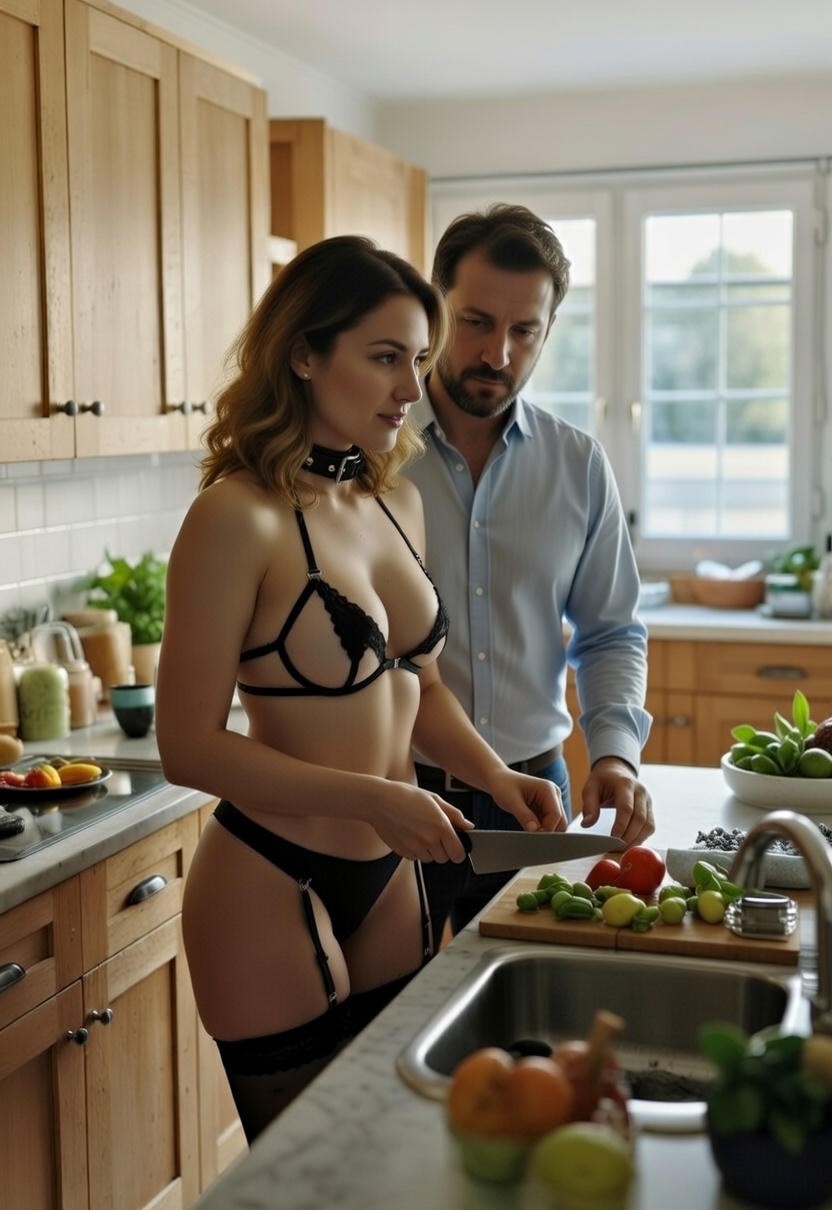 Many people think of extremes when they hear "24/7": slavery, constant sessions, or that one person no longer makes any decisions on their own. Our reality looks different – and that's exactly what we want to show you today. We report openly on how we reconcile work, household, friends, family, and leisure with our dynamic, what challenges there are, and above all: what practical tips we've collected over the last years.
The Morning – the Most Beautiful Start to the Day
Anna: "My alarm goes off at 6:15 a.m. I get up, make myself a coffee, and prepare breakfast for Lukas. This isn't a punishment or obligation imposed on me – it's my ritual through which I consciously enter my submissive role every morning. While I slice the bread and set the table, I already feel that deep calm. It's my moment of surrender before the vanilla day begins."
Lukas: "I usually wake up a bit later. When I go to the bathroom, Anna kneels briefly before me, kisses my hand, and says 'Good morning, my Lord.' That's our little morning protocol. It lasts less than 30 seconds, but it sets the tone for the whole day. After that, we're just Anna and Lukas – she goes to work as a graphic designer, I as a project manager in an IT company."
Tip 1: Small rituals instead of big gestures. Large protocols (long kneeling, elaborate addresses) are great for weekends or special evenings but often fail in everyday life. That's why we recommend mini-rituals: a kiss on the hand, a certain look, a code word when saying goodbye. They take little time but have a deep effect.
The Workday – Discretion is Everything
Anna: "In the office, I'm the confident, creative Anna who gives presentations and negotiates with clients. No one suspects that I have clear rules at home or that I sometimes ask Lukas for permission in the evening to stay out longer. My collar? It's a simple silver ring that I wear as a necklace – to outsiders, just jewelry."
Lukas: "I lead a team of 15 people. There, I have to make decisions and take responsibility. Paradoxically, this dominant role at work helps me lead clearly and fairly at home too. I don't have to 'play the dominant' – I simply am one."
Tip 2: Learn to Separate Roles. Many newcomers fear that the dynamic will "spill over" into work. Our experience: If you set clear boundaries (e.g., no "Sir" on the phone if colleagues are nearby), everything stays neatly separated. Some couples use different addresses: "Honey" or "Lukas" in vanilla contexts, "Lord" or "Master" only privately.
Household – Where the Dynamic Really Becomes Visible
Anna: "We have a clear division of tasks. I take on the majority of the housework – cleaning, laundry, cooking. That might sound outdated now, but for me, it's pure fulfillment. I love it when Lukas comes home and everything is tidy and cozy. It gives me the feeling of contributing something valuable."
Lukas: "I take care of finances, repairs, garden, and the big decisions. But I also check Anna's tasks: In the evening, she sends me a photo of the clean kitchen table or asks if she can buy certain groceries. It's not distrust, but part of our structure."
Tip 3: Time Management with D/s Tools. We use a shared app (Todoist) where I assign tasks to Anna. Each completed task is checked off and often rewarded with a small praise – sometimes just a "Good girl" via voice message, sometimes an extra long cuddle in the evening. That motivates enormously and prevents housework from becoming a burden.
Additionally, we have the "10-minute rule": If an unexpected task arises (e.g., a stain on the carpet), it must be done within 10 minutes. That keeps chaos at bay without me having to constantly check.
Leisure and Friends – the Biggest Challenge
Anna: "We have both vanilla and scene friends. At vanilla meetups, we're just a normal couple. I address Lukas informally, we discuss democratically, and no one notices anything. Only occasionally an inconspicuous look or small gesture that only we understand."
Lukas: "That was difficult at the beginning. Once a friend asked why Anna so often says 'excuse me, honey' when she wants something. We laughed and said: 'She's just polite.'"
Tip 4: Elegantly Dispel Prejudices. If questions do come up ("Why do you always decide where to go?"), we have ready answers:
- "We've just divided it that way – he has better ideas."
- "I happily leave the planning to him, then I'm more relaxed."
- "We complement each other great – he's the manager, I'm the homemaker."
Most people accept that because it's similar in many vanilla relationships – just without the label.
Tip 5: Emergency Code Word for Vanilla Situations. We have an inconspicuous code word ("headache") with which Anna can signal that she feels uncomfortable if I seem too dominant. That has saved us more than once.
Evenings and Weekends – Time for Intensity
Anna: "After a long day, we both long for closeness. Often in the evening, I kneel before Lukas, lay my head in his lap, and he strokes my hair. That's our daily reset. Sometimes there's a session, sometimes just cuddling and talking."
Lukas: "We have fixed days: Friday evening is 'our evening' – then Anna can't make plans with friends unless she asks beforehand. On Saturdays, we often do longer sessions or go to scene parties."
Tip 6: Integrate Aftercare into Everyday Life. Many think aftercare is only necessary after intense sessions. With us, there's daily mini-aftercare: a hug, a shared bath, a movie on the couch. That keeps the connection strong, even if the day was stressful.
Crises and Conflicts – D/s is No Immunity
Anna: "We argue too. Last year, I had a phase with burnout. I told Lukas: 'I can't follow the rules right now.' He immediately put the dynamic on hold for two weeks. That was incredibly important – it showed that our relationship is more important than the dynamic."
Lukas: "In conflicts, however, the structure helps us exactly: We have a rule that we never yell. Instead, Anna kneels, and we talk calmly. It might sound weird, but it forces us both to de-escalate."
Tip 7: Regular Check-ins. Once a month, we have a "D/s review": We sit down with a glass of wine and discuss: What's going well? What needs adjusting? Are there new wishes or boundaries? That prevents frustration from building up.
Why We Wouldn't Want to Miss 24/7 Anymore
Anna: "For me, the dynamic is like an anchor. In a world that constantly demands decisions, I can simply let go in many areas. That gives me freedom, not restriction."
Lukas: "And I love the responsibility. Knowing that Anna trusts me – in small and big things – makes me a better person. I want to be fair, consistent, and caring."
We're not a perfect couple. We have days when the dynamic annoys us, when we're tired, or just want to be vanilla. But we've learned that 24/7 doesn't mean always being 100% intense – but having a basic structure in which we can always find each other again.
If you're toying with the idea of integrating your dynamic into everyday life: Start small. One morning ritual. One rule per week. Talk a lot. And above all: Be patient with yourselves.
Because in the end, our 24/7 dynamic is nothing other than our very personal way of living love, trust, and passion – 24 hours a day, 7 days a week.


